
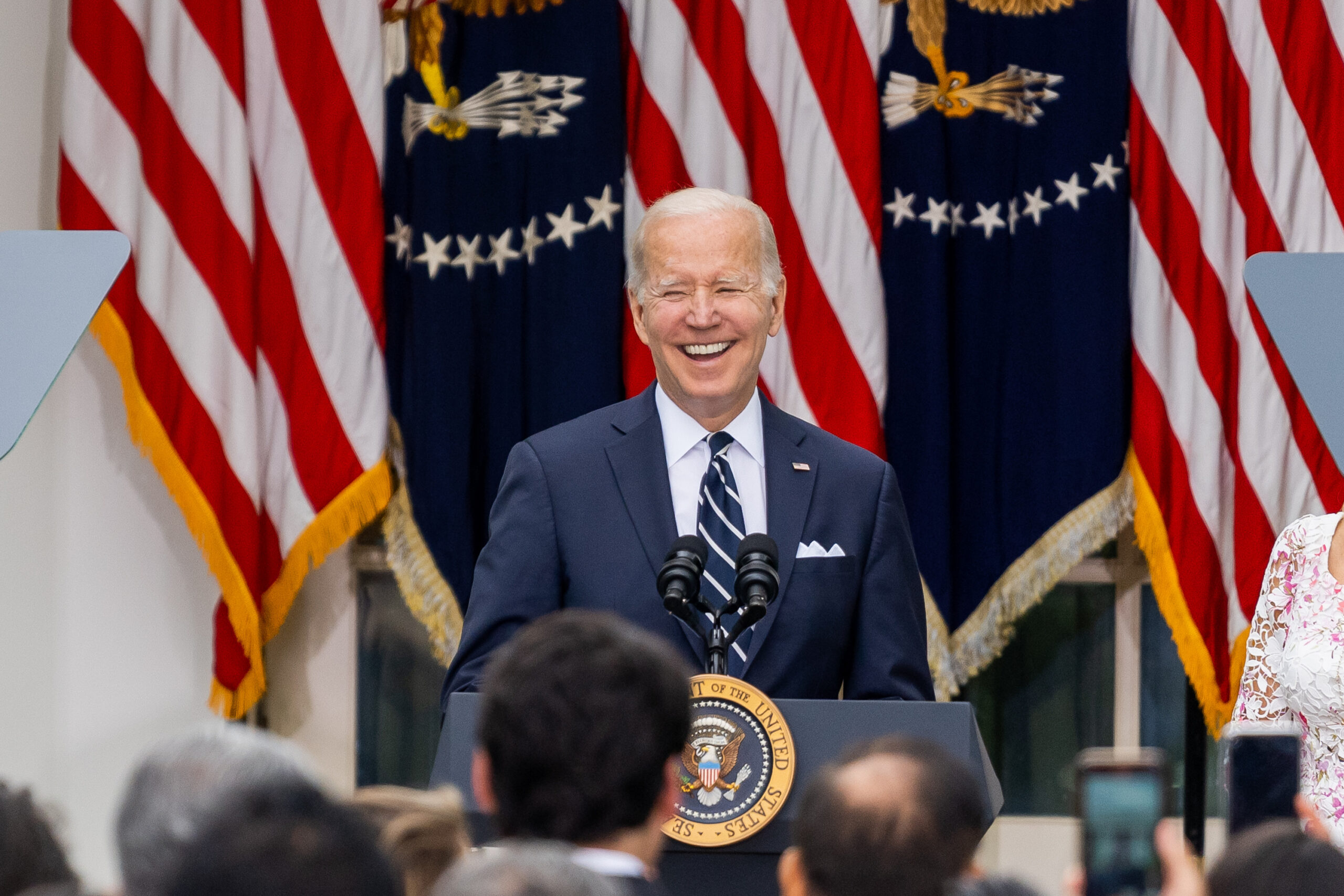

WASHINGTON — President Joe Biden announced Monday that student loan borrowers can begin to apply for debt relief through a new online application.
Biden said the application is easy and fast. It will allow every borrower with an income of $125,000 or less ($250,000 for married couples) to have up to $10,000 in debt forgiven, or $20,000 forgiven for those with Pell Grants. Those income levels have to have been during 2020 or 2021.
No documents need to be uploaded with the application, Biden said.
Late Friday, a beta version of the student loan forgiveness application was released by the Department of Education. Biden said 8 million borrowers were able to fill out the application “without a glitch.”
The White House estimated that 43 million borrowers would qualify for some relief.
Those who qualify have until December 31, 2023, to fill out the application.
GOP lawsuit
The president called out Republicans for attacking the debt relief program, as well as Republican-led states that filed a lawsuit to prevent borrowers from applying for financial relief. The suit argues Congress did not approve the debt cancellation and the Department of Education is misusing its emergency authority.
“Their outrage is wrong and hypocritical,” Biden said. “I don’t want to hear from Republican officials who had hundreds of thousands of dollars, even millions of dollars, in pandemic relief loans—PPP loans—who now attack working class Americans for getting relief.”
U.S. Secretary of Education Miguel Cardona also joined the president for the announcement. Cardona said the department is working to also include borrowers with private loans to qualify for debt relief.
“We are working on pathways there to support those,” Cardona said. “But we’re moving as quickly as possible to provide relief to as many people as possible.”
The administration quietly dropped a section of borrowers—nearly 800,000—from qualifying for the student loan forgiveness plan if they have loans administered through the now-defunct Federal Family Education Loan program, or Perkins loans, following a lawsuit from half-a-dozen Republican-led states.
A Missouri judge will issue a decision on the lawsuit filed by attorneys general from Missouri, Nebraska, Arkansas, Kansas and South Carolina and on behalf of Iowa’s governor.
Another lawsuit, filed in Texas, seeks to block the program, arguing that the Biden administration did not ask for public comment before moving forward with its action
More than 43 million Americans have student loan debt, and the Federal Reserve estimates that the total U.S. student loan debt is more than $1.75 trillion.
Watch out for scams
Biden also warned of a scam in which callers will pretend to be from the federal government, asking about assisting a borrower with student loan debt.
“Let’s be clear,” Biden said. “Hang up. You never have to pay for any federal help from the student loan program.”
He said student loan repayment, which has been paused since early 2020, will resume in January.
Those borrowers who continued to pay off their loans during the student loan freeze in the early stages of the pandemic are allowed to get reimbursed for payments made beginning of March 13, 2020, by contacting their loan servicers to request a refund.
Michigan Attorney General Dana Nessel also issued an alert on Monday, giving the following tips:
- For more information about this relief, visit the Federal Student Aid website and/or their loan servicer. Do not provide your personal or financial information in response to unsolicited emails, phone calls, or texts either purportedly from the federal government or a company claiming to be able to assist you with obtaining the announced relief.
- Don’t agree to pay anyone for assistance in obtaining this relief.
- Don’t be rushed. To get you to act fast, scammers say you could miss qualifying for repayment plans, loan consolidation, or loan forgiveness programs if you don’t sign up right away. Take your time and check it out.
- Don’t give away your FSA ID. Some scammers claim they need your FSA ID to help you, but don’t share your FSA ID with anyone. Dishonest people could use that information to get into your account and steal your identity.
“The opportunity for debt forgiveness is also an opportunity for scammers to try and gain access to your personal and financial information,” said Nessel. “It is important to remember that the federal government will not proactively email or text you to take advantage of this program. Residents should rely on legitimate sources for information and not fall for messages that create a sense of urgency or demand financial information.”
Advance Editor Susan J. Demas contributed to this story.
authored by Ariana Figueroa
First published at https%3A%2F%2Fmichiganadvance.com%2F2022%2F10%2F17%2Fthe-student-debt-relief-application-is-live-heres-what-you-need-to-know%2F

Comments are closed.