

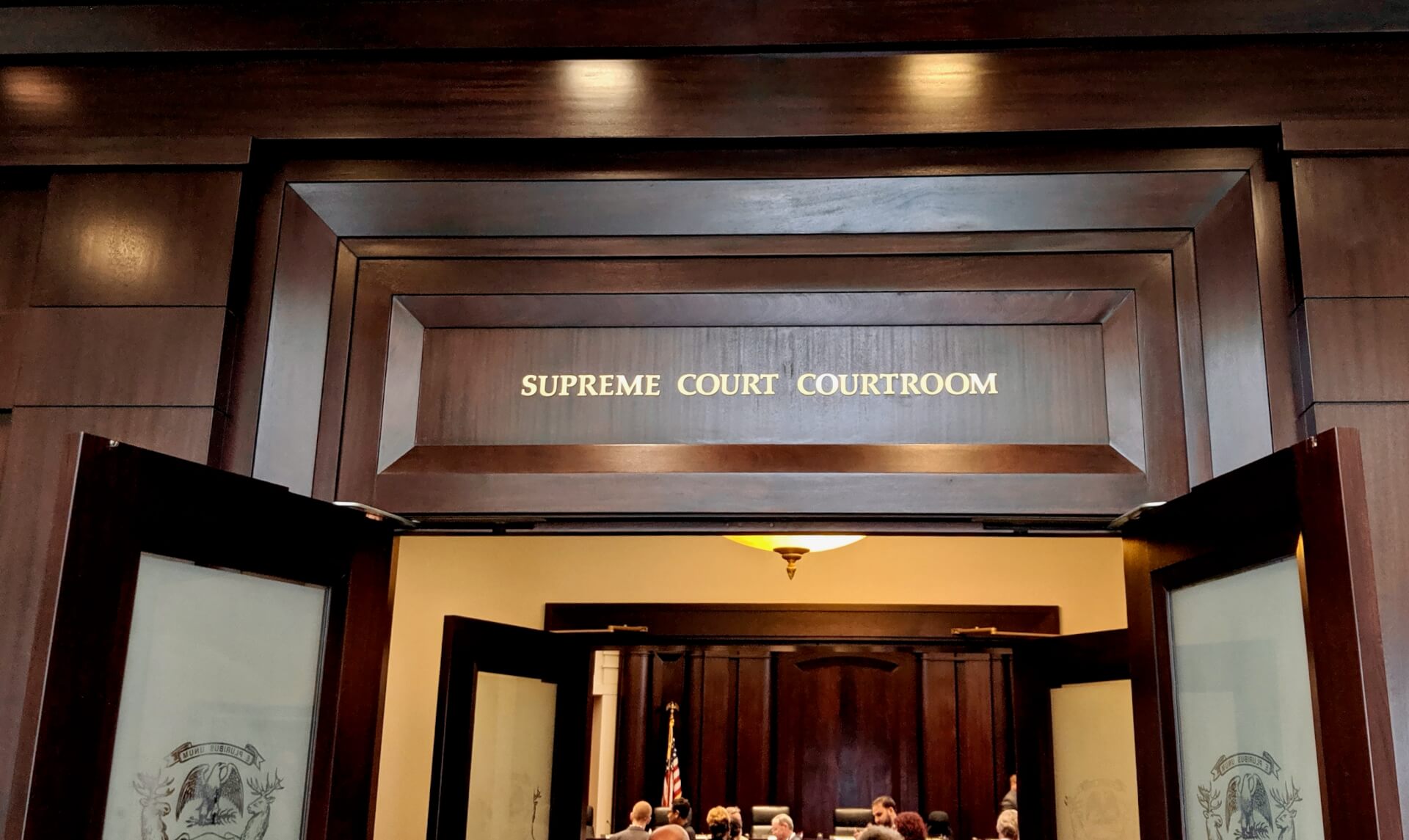

During oral arguments before the Michigan Supreme Court on Wednesday, an attorney representing Black state and local lawmakers, as well as others continued the call for dumping the state’s recently approved maps during its first independent redistricting process.
“Why should African Americans be the sacrificial lamb?” said Nabih Ayad, attorney and a board member of the Arab American Civil Rights League, who represented the Detroit Caucus during the 90-minute virtual session. “It’s unfair and unjust.”
In December, the Michigan Independent Citizens Redistricting Commission (MICRC) approved new districts for the next 10 years for the state House, state Senate and U.S. House. The panel of four Democrats, four Republicans and five independents was created by a 2018 constitutional amendment. Prior to that, the Legislature designed new maps and the governor signed off.
Earlier this month, a lawsuit filed by the Detroit Caucus, a group of Black metro Detroit state House and Senate members as well as local officials and other residents, was leveled against the MICRC.
The matter centers on the interpretation of the federal Voting Rights Act (VRA). The caucus alleges that the commission’s maps violate the VRA and unfairly split up Detroit’s Black voters. Detroit is 79% African American. African American compose about 14% of the state population.
The Michigan Supreme Court hears redistricting arguments, Jan. 26, 2022 | Screenshot
Michigan has traditionally had two minority-majority congressional districts, which are located in metro Detroit.
Katherine McKnight, an attorney at the law firm BakerHostetler, represented MICRC. She argued that the current VRA doesn’t require majority-minority districts. The act, she suggested during her presentation, protects “a minority community’s opportunity to elect.” She also stated that voting data suggests that whites have a willingness to vote for a candidate of color.
“Just because a district is not drawn at majority-minority does not mean it will not elect a candidate for the minority community,” McKnight said.
Justice David Viviano, a GOP-nominated justice, challenged the caucus’ position.
“There is no statistical analysis in the affidavit, there’s no regression analysis, there’s no demographic analysis, there’s no analysis of particular races in elections of the past. The types of things that we expect to see in these types of cases. There is none of that in the affidavit that you submitted…,” Viviano said
 Michigan Supreme Court Justice Richard Bernstein at the Michigan Elder Abuse Task Force meeting in Flint, July 26, 2019 | Andrew Roth
Justice Richard Bernstein, who was nominated by Democrats, is blind. He compared the experience of Blacks and whites decision makers in the process to one who is blind and another who is not.
In his questioning, Bernstein asked Ayad rhetorically: “How many current Michigan Supreme Court justices are African American?”
The court does not have an African American justice. As for the MICRC, two of the 13 members, Juanita Curry and Brittani McKellom, are African American. One member, Anthony Eid, is of Middle Eastern descent.
“If you are not white, you have never been discriminated against,” said Ayad to Bernstein. “You would not know how it is to be an African American.”
John Nevin, court spokesman, said that the court immediately meets to discuss a case after oral arguments. The candidate filing deadline is April 19. The state primary election is Aug. 3.
In a separate suit filed by seven Michigan Republicans against the state’s redistricting commission, they argue that the recently approved congressional maps are “non-neutral,” “arbitrary,” and disregard community boundaries.
authored by Ken Coleman
First published at https%3A%2F%2Fmichiganadvance.com%2F2022%2F01%2F26%2Fblack-lawmakers-argue-new-michigan-legislative-maps-are-unfair-and-unjust-in-court%2F

Comments are closed.